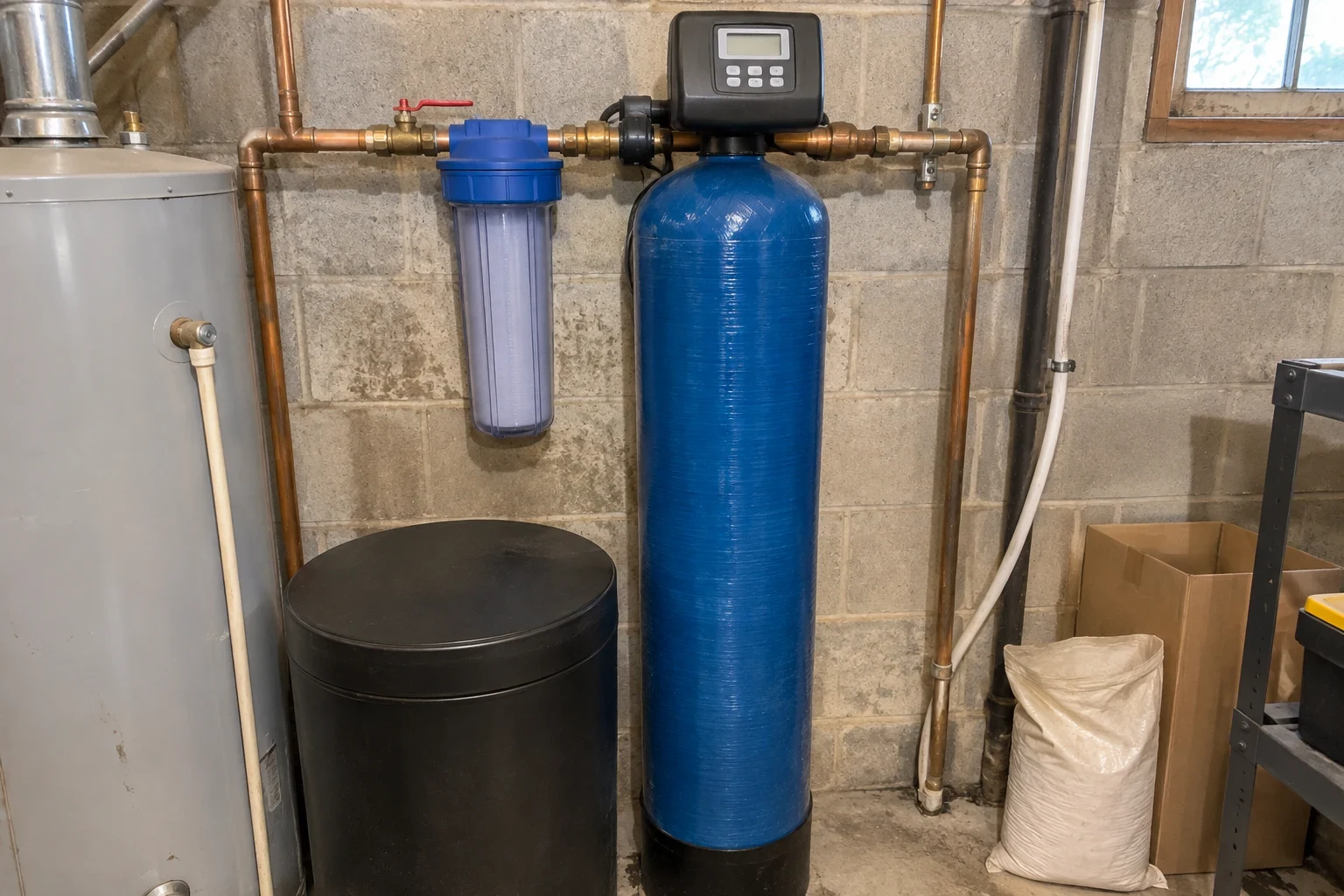
What are the downsides of installing a whole house water filter in Pewaukee?
A whole house filter fixes a lot, but it has real tradeoffs, and most of them come down to sizing, placement and upkeep.
What are the downsides of installing a whole house water filter?
The main downsides are upfront cost, ongoing media or cartridge replacement, possible water pressure loss if the unit is undersized, and the space it needs near your main line. It also does not soften hard water or catch lead picked up from pipes after the filter. Most of these are avoidable with correct sizing. Ask for a free quote at (262) 924-2449.
Will a whole house filter lower my water pressure?
It can, and this is the complaint we hear most about systems someone else installed. Every filter adds resistance. A small 10-inch cartridge housing on a 1-inch main line can choke flow when two showers and the washing machine run at once, and the drop gets worse as the cartridge loads up with sediment.
The fix is sizing the system to your home's peak flow in gallons per minute, not to the price tag. Larger tank-style carbon systems and full-size 4.5 by 20-inch housings move far more water with less loss. We look at your pipe size, the number of bathrooms and how your family actually uses water before recommending anything.
How much upkeep does a whole house filter need?
More than people expect with cartridge systems, less with backwashing tank systems. A sediment cartridge in front of the carbon stage may need changing every few months if your water carries rust or grit. Skip it and pressure drops, then the carbon behind it clogs early.
Backwashing carbon tanks flush themselves on a schedule through a control valve, so there is no cartridge to swap on a regular basis. The tradeoff is that they need a drain nearby, a standard outlet for the valve, and they use some water during each backwash cycle. The carbon media itself is replaced every several years, depending on how much chlorine or other material it is catching.
- Cartridge systems: lower upfront cost, frequent cartridge changes, pressure falls as cartridges load
- Backwashing tank systems: higher upfront cost, little routine work, needs a drain and power
- Either type: a bypass valve so the system can be serviced without shutting off water to your home
What a whole house filter does not fix
A carbon filter is good at chlorine taste and smell, some organic compounds and sediment when paired with a pre-filter. It does not remove hardness. Calcium and magnesium pass straight through carbon, so scale on faucets, spotty dishes and a water heater full of mineral buildup will continue. That job belongs to a water softener, and in many homes the two work as a pair, with the filter ahead of the softener to protect its resin from chlorine.
It also cannot clean water after it leaves the filter. The unit sits where the main line enters your home, so lead or copper picked up later from old solder joints and brass fixtures still reaches the tap. For drinking and cooking water, an under-sink reverse osmosis system handles those dissolved metals at the point you actually use them.
If your home is on a private well, as many properties around Pewaukee, Lisbon and Genesee are, iron, manganese and sulfur smell usually call for well water treatment designed for those problems rather than a standard carbon filter.
Space, plumbing and Wisconsin winters
A whole house system needs a spot on the main line after the meter or pressure tank, with room to service it. In most basements that is easy. In homes with a finished lower level or a utility closet already packed with a water heater and furnace, it takes planning.
Placement matters in this climate. A filter or tank in an unheated garage or crawl space can freeze in January, cracking the housing or the control valve. We install indoors in conditioned space and run the plumbing with copper or PEX and a proper bypass so you can isolate the system later. The same small team that looks at your setup also does the install, so the plan we talk through at quote time is the one that ends up in your basement.
Is the upfront cost worth it?
What moves the price is the system type, the flow rate it needs to handle, whether a pre-filter or softener is part of the job, and how much rerouting your plumbing needs. A simple cartridge housing costs less to put in but more in cartridges and attention over time. A backwashing tank costs more on day one and asks little of you afterward.
We put the numbers in writing so you can compare. Your quote holds for 30 days, financing is available through U.S. Bank Avvance on approved credit, and full payment is due at the completion of the install, not before. You also have three business days to cancel after you sign.
More questions about whole house filters
Something not covered here? (262) 924-2449
Does removing chlorine leave my pipes unprotected?
Water past a carbon filter has no disinfectant left, so water that sits unused for long stretches, such as in a vacation home, can go stale in the lines. In a home in daily use, water turns over constantly and this is rarely a concern.
Can bacteria grow inside a carbon filter?
It can if cartridges are left in far past their change interval or a system sits unused for weeks. Keeping to the replacement schedule, or using a backwashing tank, keeps the media from becoming a problem.
Do I need a whole house filter and reverse osmosis?
Not always. If your only concern is drinking water, reverse osmosis alone may be enough; if chlorine smell bothers you in the shower and laundry, a whole house filter is the part that addresses that.
Will a whole house filter wear out my water heater faster?
No. Removing sediment can actually help, but because carbon does not remove hardness, scale buildup in the heater depends on whether you also have a softener.
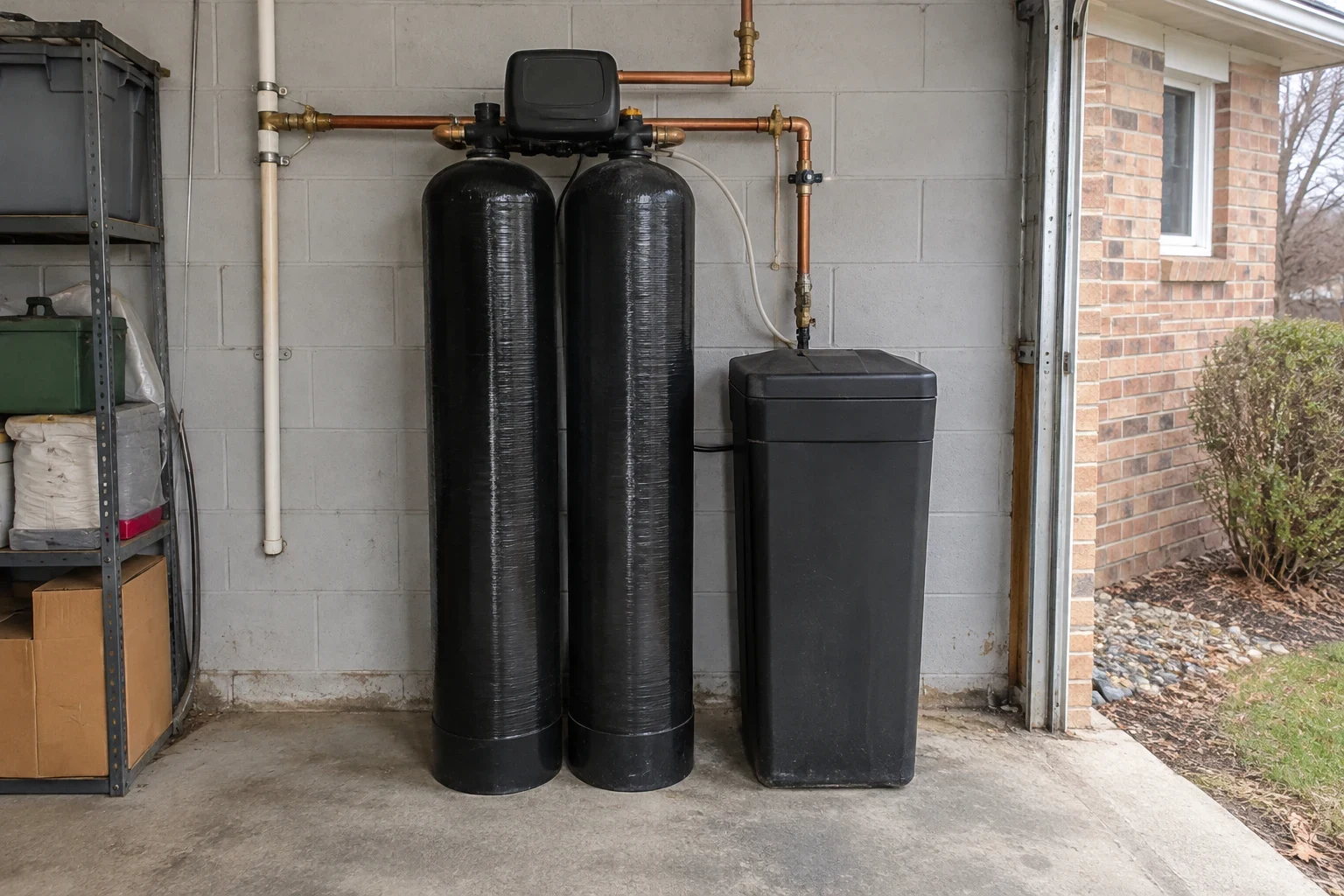
Find out which tradeoffs apply to your home
Tell us about your water, your plumbing and what bothers you about it. We will explain which system fits, where it would go and what upkeep to expect, then put a free quote in writing. Ask about financing on the same call.