ServicesWell Water Treatment
Well Water Treatment in Pewaukee
Orange stains in the toilet, a rotten-egg smell from the hot tap, scale on the faucets. We install iron filters, sulfur treatment and softening for private wells, matched to your water and your pump, with the same small crew from quote to cleanup.
What well water treatment fixes
A private well sends water straight from the ground to your fixtures, with no utility treatment in between. In southeast Wisconsin that water is often hard, and it can carry dissolved iron, manganese or hydrogen sulfide gas. Each one causes a different problem and needs a different fix, which is why one cartridge filter rarely solves it.
Iron comes out of the well clear, then oxidizes once it meets air, leaving rust-colored stains in sinks and toilet tanks. Manganese does the same in brown and black. Hydrogen sulfide is the rotten-egg smell, and it is often stronger on the hot side because a magnesium anode rod in the water heater reacts with sulfate in the water.
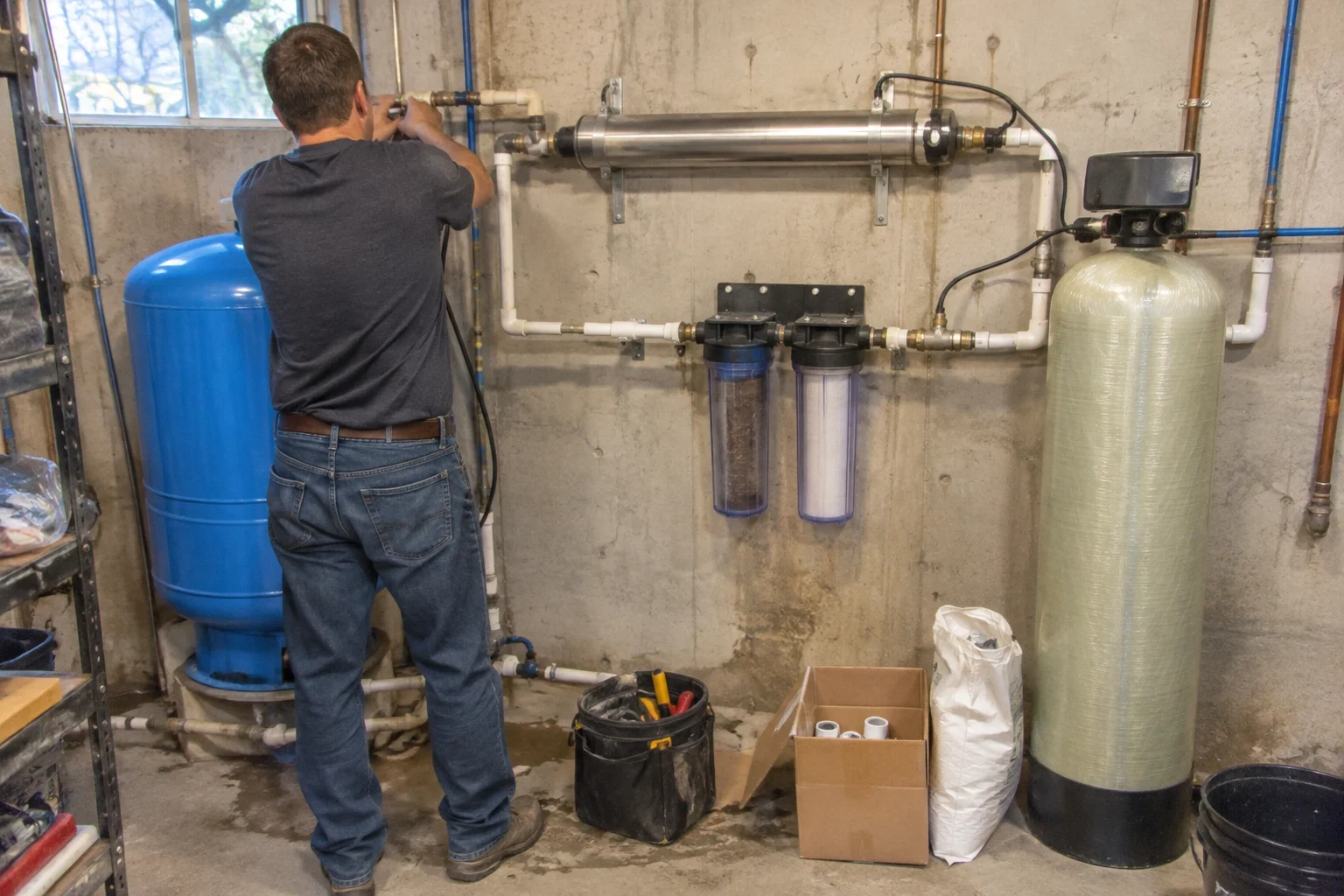
Our job is to pick the right equipment for the combination you have, size it so your well pump can actually backwash it, and plumb it in cleanly. The same two or three people who look at your system on the first visit are the ones who install it and come back if anything needs adjusting.
What the installation includes
Iron and sulfur filter
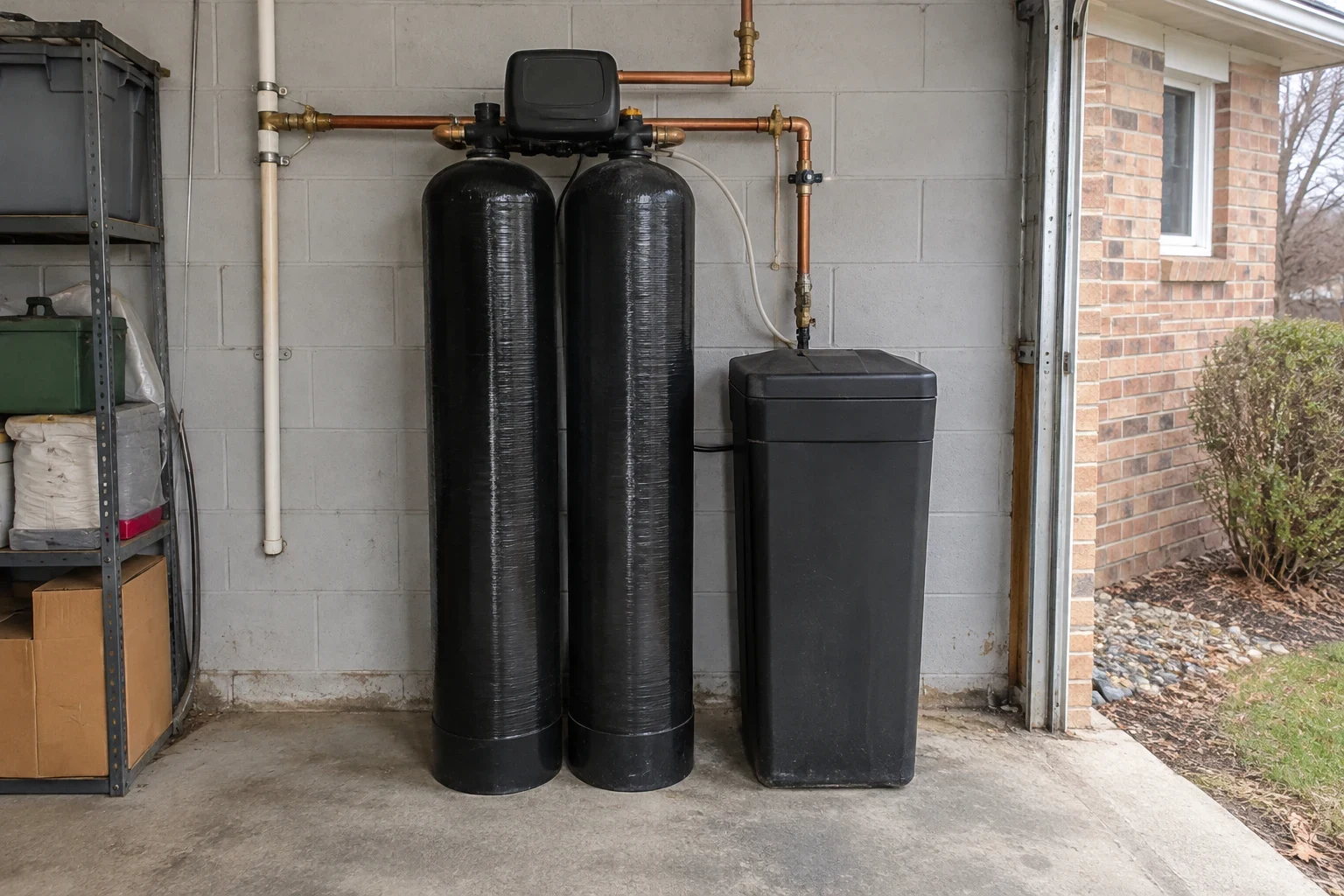
Most well jobs center on an air-injection oxidizing filter. An air pocket at the top of the tank oxidizes iron, manganese and sulfide so the media bed can trap them, and a timed backwash flushes the buildup to drain.
Softening where hardness calls for it
Hard well water leaves scale in water heaters and on fixtures. When your water needs it, we pair the iron filter with one of our water softeners, installed after the filter so the resin is not fouled by iron.
Sediment prefilter
Sand and grit from the well wear on control valves and plug media. A sediment filter ahead of the system protects everything downstream and is a simple cartridge change for you.
Bypass, drain line and air gap
We plumb in a three-valve bypass, so turning one handle routes water around the equipment and your taps keep running while a tank is serviced. The backwash line runs to a floor drain or standpipe and stops short of it with an open gap, so drain water has no path back into the supply lines in your home.
Startup and settings
We set the backwash schedule and regeneration timing to your household's water use, then run a full cycle before we leave so you can see it work.
Signs your well water needs treatment
- Orange or rust stains
- Stains in toilet bowls, tubs and on laundry point to dissolved iron. They come back days after scrubbing because the iron keeps arriving with every gallon.
- Black or brown specks
- Dark residue in fixtures or on dishwasher racks usually means manganese. It also builds up inside lines and aerators.
- Rotten-egg smell
- A sulfur odor from the taps, especially hot water, comes from hydrogen sulfide or from bacteria reacting with the water heater's anode rod.
- Scale and spotting
- White crust on showerheads, cloudy glassware and a water heater that rumbles all point to hard water leaving calcium and magnesium behind.
- A filter that keeps clogging
- If a whole-house cartridge turns orange and plugs within weeks, it is catching iron it was never designed to handle.
How a well water job runs
- 1
Phone call and free quote
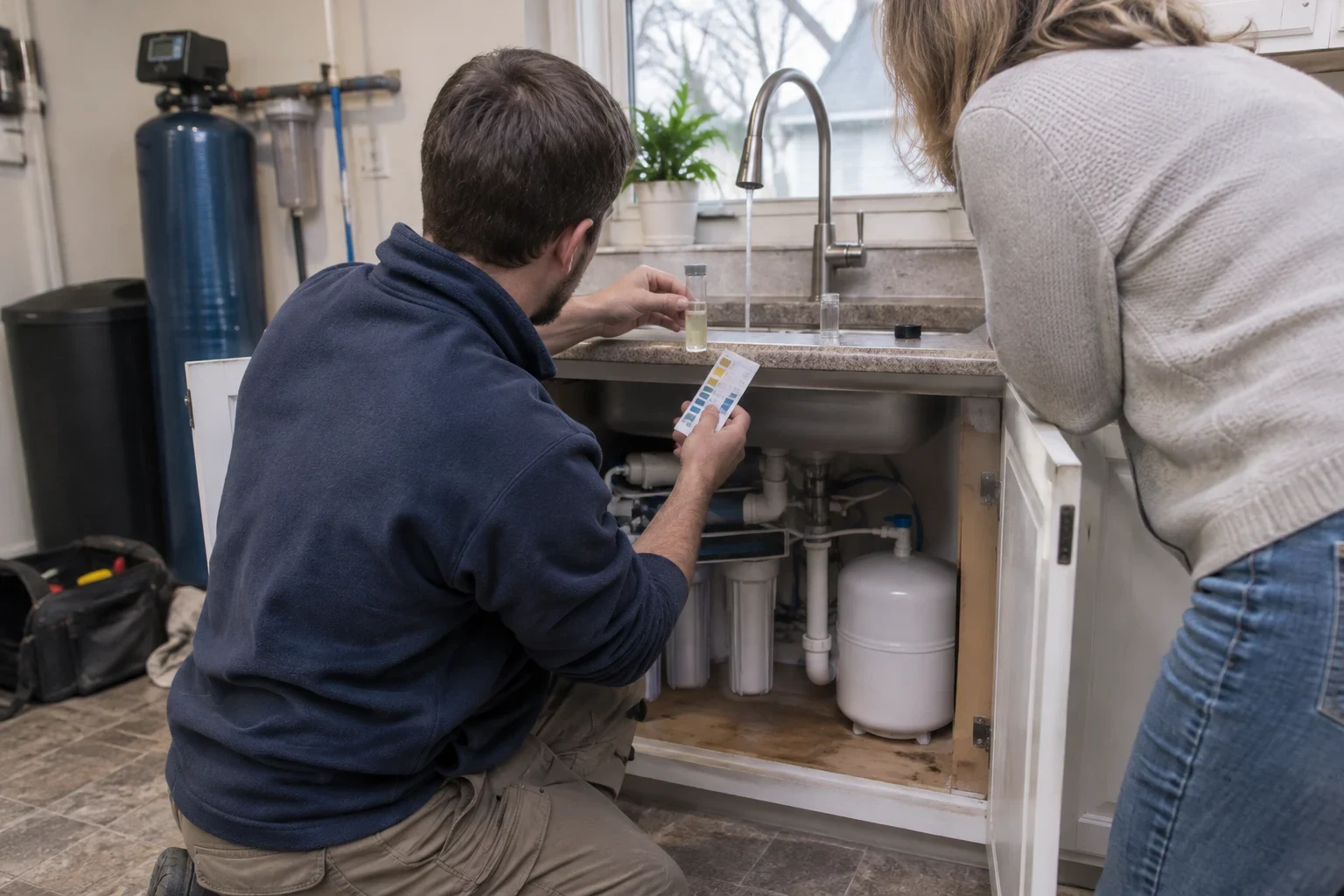
You describe what you are seeing and smelling, and we set a visit. If you have a recent lab report on your well, keep it handy, since iron, manganese, hardness and pH numbers let us size the system more closely.
- 2
On-site look at your system
We check your pressure tank, the space near it, the nearest drain and outlet, and we time how fast your pump fills a bucket. That flow rate decides which tank size your well can backwash properly. You get a written quote that lists each piece of equipment.
- 3
Install day
The same crew that quoted the job does the install, usually in one visit. We shut off water at the pressure tank, cut in the bypass and equipment, run the drain line, and protect the floor around the work.
- 4
Startup and walkthrough
We flush the system, run a backwash, check for leaks and show you how the bypass and salt or cartridge upkeep work. If the smell or staining has not cleared after the first weeks, call us and the same people come back to adjust it.
What affects the cost
Well systems vary more in price than city-water systems because the water itself varies so much from one well to the next. We quote by phone and in writing after seeing your setup, and the quote holds for 30 days. Full payment is due at the completion of the install, and you have three business days to cancel after you sign.
- What is in the water
- Iron alone is the simplest case. Iron with sulfur, manganese and hardness may need a filter plus a softener, which adds a second tank and more plumbing.
- Pump flow rate
- A low-yield well cannot backwash a large tank. Matching the media tank to your pump sometimes means a smaller unit or a different media type.
- Space and plumbing
- Tight basements, old galvanized pipe near the pressure tank, or no floor drain nearby add labor and materials.
- Financing
- Financing is available through U.S. Bank Avvance, on approved credit. Ask about it on the call and we will explain how it works.
Well water treatment questions
- Do I need a lab report before you quote?
- No. If you already have a lab report on your well water, the iron, manganese, hardness and pH numbers help us size the system more closely. Without one, we work from the stains, the smell, your plumbing and your pump flow. Either way, the quote explains why we chose each piece of equipment.
- Will a water softener alone fix iron?
- A softener can remove small amounts of clear ferrous iron, but higher iron, manganese or any sulfur smell will foul the resin over time. That is why most wells with staining get a dedicated iron filter ahead of the softener.
- Why is the smell worse on the hot water?
- The magnesium anode rod in many water heaters reacts with sulfate and bacteria in well water to produce hydrogen sulfide inside the tank. Treating the incoming water usually helps, and in some cases swapping the anode rod finishes the job.
- What maintenance does an iron filter need?
- Very little. The system backwashes itself on a timer. You change the sediment cartridge periodically, and if you have a softener you keep salt in the brine tank.
- What warranty comes with the equipment?
- Our systems carry lifetime coverage on tanks, valve ceramic discs and dry mechanical parts. We go over what that covers when we write your quote.
- Should I also get drinking water treatment?
- For the kitchen tap, many well owners add one of our reverse osmosis systems under the sink for cooking and drinking water. We can quote both together so the plumbing is done in one visit.
Get your well water sorted out
Describe the stains, the smell or the scale on the phone, and we will book a time to look at your pressure tank and pump. One small crew writes your quote, does the install and handles any follow-up, here in Pewaukee and nearby towns like Sussex and Hartland.