ServicesReverse Osmosis
Reverse Osmosis Systems in Pewaukee
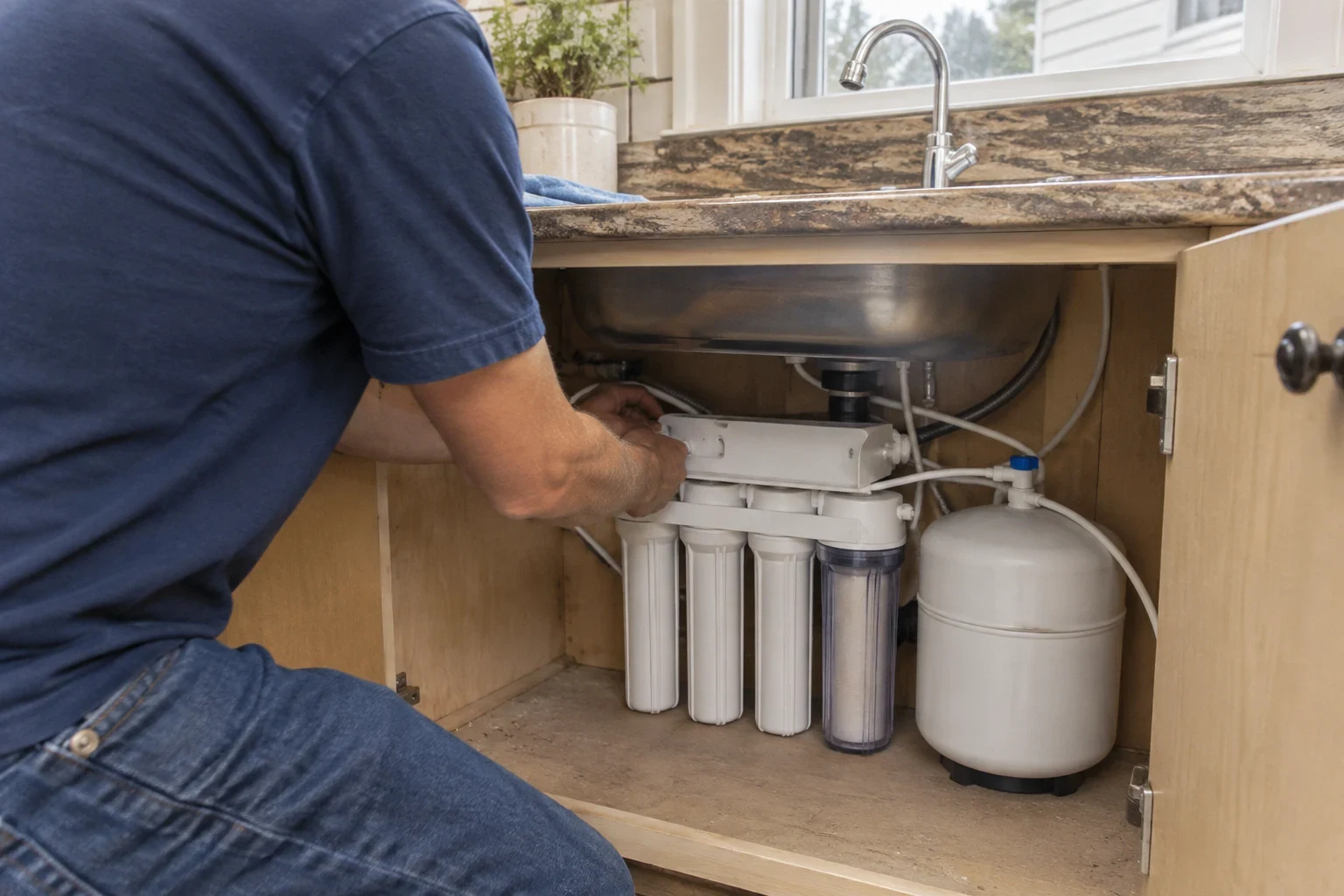
Reverse osmosis pushes your water through a tight membrane that holds back dissolved solids a pitcher filter misses, then sends the treated water to its own faucet at the sink. It suits coffee, ice and cooking. The same installer measures your cabinet, plumbs the unit and comes back to service it.
What reverse osmosis does, and when it makes sense
The core of the system is a semipermeable membrane rolled into a cartridge. Line pressure drives water across it. Water molecules get through, while most dissolved solids, including sodium, nitrate, lead and many metals, are held back and rinsed away through a small drain line. Carbon cartridges on either side of the membrane take care of chlorine taste and odor.
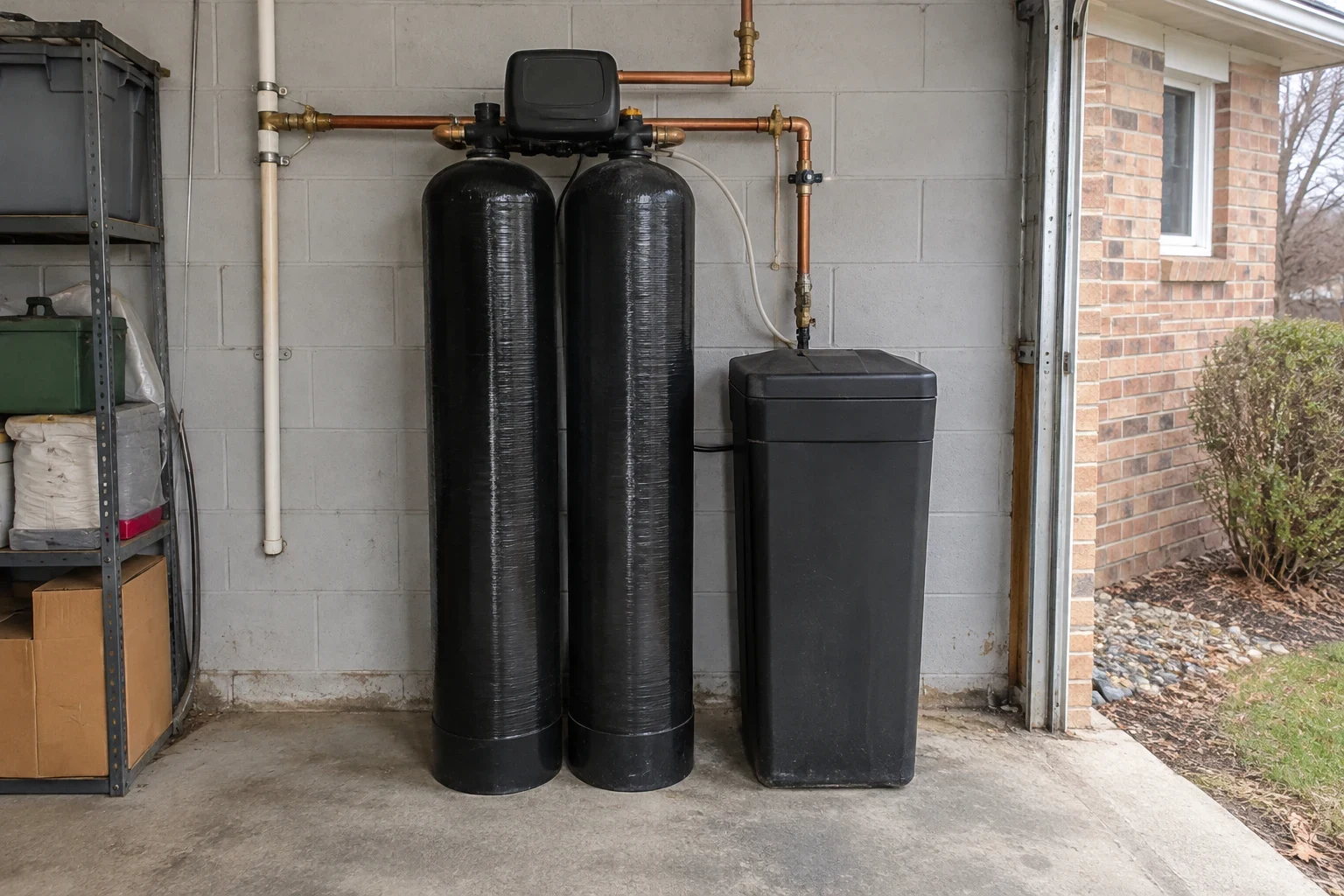
Because it is a point-of-use unit, it treats a single tap instead of every fixture in your home. That makes it the right choice when your concern is the water you drink and cook with. For softer water in showers and appliances, see our water softeners page; if chlorine taste shows up at every faucet, whole-home filtration fits better.
We keep the crew small on purpose. One installer checks your sink, does the plumbing and returns for filter changes, so whoever services the system already knows exactly how it went in.
What comes with an install
Sediment prefilter
A 5-micron cartridge traps sand, rust flakes and grit before they reach the membrane, where they would scratch the surface or plug it.
Carbon block prefilter
Chlorine slowly attacks the membrane material. Pulling it out with carbon first protects the most costly part of the system.
Membrane and storage tank
A membrane makes water at a trickle, so a pressurized tank with an internal air bladder holds a supply ready for a full glass. We set the tank's air precharge before it fills.
Drinking faucet and drain connection
Treated water gets its own spout, set in an unused sprayer hole or a new hole in your counter. The reject line ties into the sink drain through a drain saddle with an air gap, so wastewater cannot siphon back toward the membrane.
Optional refrigerator line
If you want filtered ice and water from your fridge, we can tee a line off the same system and run it there.
Signs a reverse osmosis system belongs in your kitchen
- You buy bottled water every week
- If cases of water are a standing item on your grocery list, an under-sink system gives you the same thing from a tap.
- Softened water tastes salty
- Ion exchange softeners add sodium as they remove hardness. Reverse osmosis takes most of it back out at the drinking tap, so you keep soft water everywhere else.
- Chlorine taste in coffee and ice
- Municipal disinfection is a good thing, but the taste carries into drinks. The carbon stages remove it.
- Older plumbing in your home
- Lead can come from old solder and fixtures inside a house, not the water main. A membrane rated for lead reduction adds a layer of protection at the tap you drink from.
- Cloudy ice and spotted glassware
- High dissolved minerals show up as white haze in ice cubes and film on glasses. Lower dissolved solids at the faucet clears both.
How the job runs
- 1
A phone call and a free quote
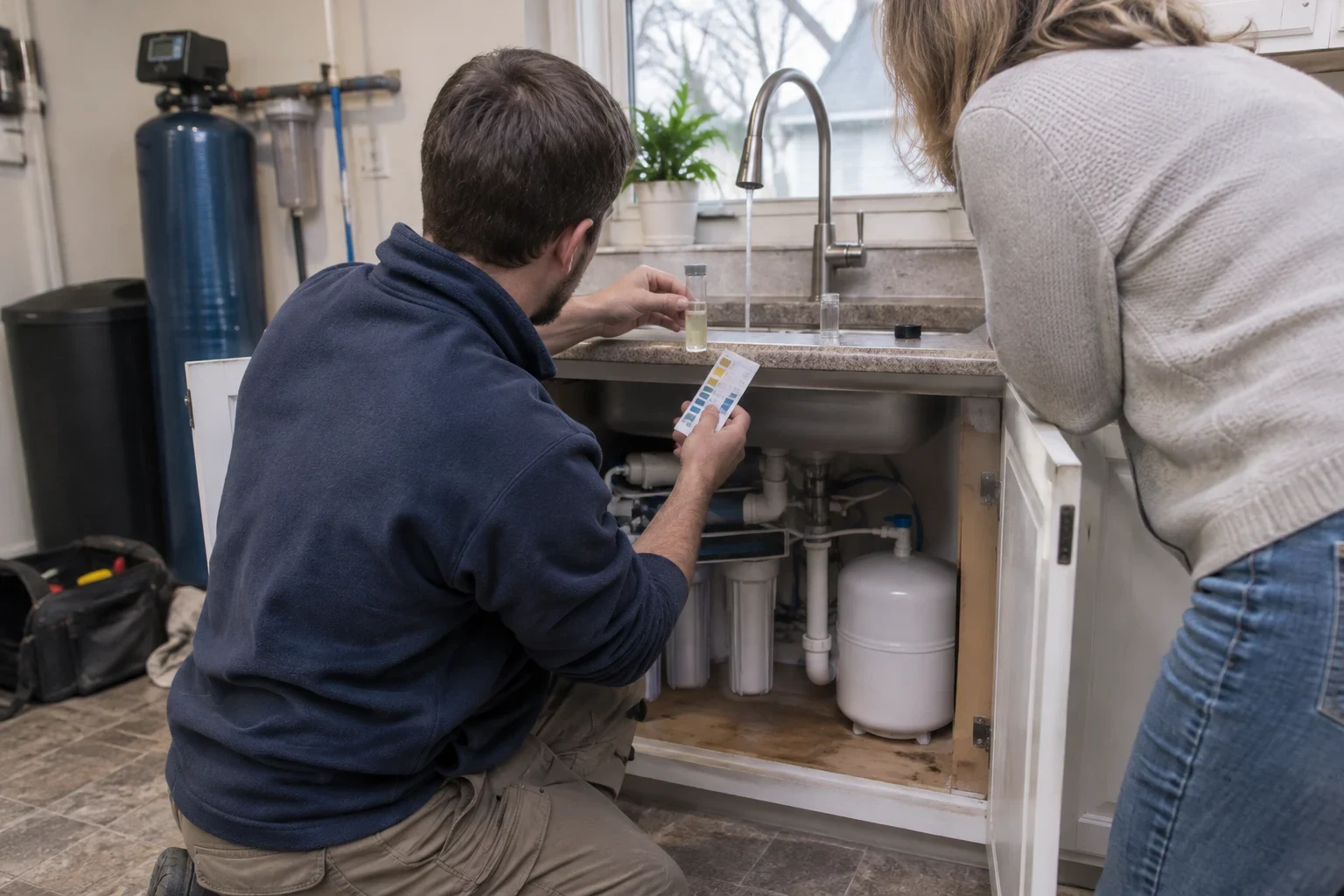
Tell us about your home, where your water comes from (city main or private well) and what bothers you about it. We ask about your sink, your countertop and any softener you already have, then give you a free quote that holds for 30 days.
- 2
Pressure and space check
A membrane works best at about 40 psi or higher, so we confirm your incoming pressure. If it runs low, which happens on some private wells, a booster pump may be needed, and you hear about it before any parts are ordered.
- 3
Install day
We close the cold supply, add a feed valve, hang the filter housings and set the tank in the cabinet, then drill for the faucet if needed. Most installs take part of a day, and we wipe down the cabinet and counter before we leave.
- 4
Flush and walkthrough
Fresh carbon sheds fine dust and a new membrane carries a preservative, so the first tankful goes down the drain. We then look over every compression fitting for weeping and show you the cartridge order and change schedule.
What moves the price
Two things set most of the cost: the unit you pick and the work it takes to fit it into your kitchen. Your quote breaks out each part and the labor on separate lines, so nothing is bundled out of sight. Payment is due in full once the install is finished, and financing through U.S. Bank Avvance is available on approved credit.
- Number of stages
- A basic four-stage unit runs less than one with a final remineralizing cartridge that puts some calcium and magnesium back for taste.
- Incoming pressure
- Below roughly 40 psi, a membrane makes water slowly and sends more to drain. A booster or permeate pump fixes that, but it adds hardware and needs an outlet under the sink.
- Countertop surface
- A new faucet hole in stainless or laminate goes fast. Quartz and granite need a diamond core bit, water cooling and extra time.
- Additional lines
- Feeding a refrigerator or a basement bar sink from the same unit adds tubing, tees and labor, and the run length matters.
Reverse osmosis questions
- Does a reverse osmosis system waste water?
- It uses some. Rejected minerals have to be rinsed off the membrane surface, and that rinse goes to the drain. Current units send a few gallons down the drain for every gallon of treated water, and an automatic shutoff valve stops the flow once the storage tank is full, so the system sits idle between draws.
- How often do filters need changing?
- Plan on new sediment and carbon cartridges every 6 to 12 months, depending on your usage and your water. With fresh prefilters protecting it, a membrane usually goes several years. We keep your install date on file so you know when the next change is coming.
- Do I still need a water softener?
- They solve different problems. A softener guards your water heater, fixtures and laundry throughout the house, while reverse osmosis treats one drinking tap. With hard water, running a softener upstream also keeps scale from building on the membrane and shortening its life.
- Will the water taste flat?
- Water stripped of most minerals can taste plain to some people. A remineralizing cartridge placed last in line returns a trace of calcium and magnesium, and most people like the result better for drinking straight from the glass.
- What warranty comes with the system?
- The system carries lifetime coverage on tanks, valve ceramic discs and dry mechanical parts. Filter cartridges and membranes wear with use, so they are replaced on a schedule rather than covered.
- What if I change my mind after signing?
- You can cancel within three business days of signing. The quote itself stays good for 30 days, so there is no rush to decide on the spot.
Better drinking water from one tap
Tell us about your kitchen and your water, and we will size a system and quote it at no cost. Ask about financing on the same call.